Portable Pellet Grill Temperature Guide
Short Answer
For a portable pellet grill, the right cooking temperature depends on the food, the desired texture, and the cooking stage. Lower ranges are better for smoking and slower cooks, medium ranges work well for chicken, vegetables, and balanced roasting, and higher ranges are better for burgers, faster grilling, and finishing steak.
But good pellet grilling is not only about selecting a number on the controller. The real challenge is whether the grill can hold a stable cooking environment while fuel feed, airflow, weather, food load, and lid opening keep changing the thermal balance inside the cooker.
That is why a useful temperature guide should explain both:
- what temperature range to use,
- and why stable temperature control is technically hard on a pellet grill.
Temperature Guide by Cooking Style
These ranges are practical starting points rather than fixed rules:
| Cooking style | Typical use | Beginner temperature range |
|---|---|---|
| Low-and-slow smoking | ribs, pork, deeper smoke flavor | 180 to 250 F |
| Balanced roasting | chicken, vegetables, sausages, mixed meals | 275 to 350 F |
| Hot grilling | burgers, skewers, faster cooks | 375 to 450 F |
| High-heat finishing | steak finishing, crisping skin, final sear | 450 F and up if the grill setup supports it |
For most beginners, the middle range is the easiest place to start. It is more forgiving and gives the user time to understand how the grill responds before moving into either faster grilling or longer low-temperature cooks.
Best Temperature Range for Popular Foods
Chicken Wings
Chicken wings usually need enough heat to render the skin properly while still allowing some smoke development. Mid-range to moderately hot cooking works well for many portable pellet-grill setups.
Chicken Thighs and Drumsticks
These are beginner-friendly because they retain moisture more easily than leaner cuts. A medium roasting range is a good starting point.
Steak
Steak on a pellet grill often works best as a two-stage process:
- steady cooking first,
- then hotter finishing or searing.
This is where stable control matters. A grill that can recover cleanly and hold the intended finishing temperature gives more repeatable results.
Burgers and Sausages
These are useful entry-level foods for learning how a pellet grill reacts at higher heat and during repeated lid opening.
Ribs and Pork
These are classic low-and-slow foods, so stability matters more than speed. The best result usually comes from patient temperature control rather than aggressive heat application.
Vegetables
Vegetables are useful for learning because they respond clearly to temperature changes. Lower-medium heat gives more time for smoke and tenderness, while higher heat pushes char and faster finishing.
Why Pellet-Grill Temperature Control Is More Complex Than Gas Grilling
A gas grill creates heat directly from a burner. A pellet grill is a combustion and control system.
It has to continuously balance:
- pellet feed timing,
- ignition behavior,
- fan-driven airflow,
- fire-pot combustion,
- heat transfer through the cooker,
- outdoor conditions,
- food load,
- and lid-open recovery.
That is why pellet grills feel more technical than simple gas grills. The number on the controller is only the target. The system still has to create, manage, and translate combustion into a stable cooking zone where the food actually sits.
How Pellet Combustion Works
A pellet grill burns wood pellets through a controlled process:
- Pellets move from the hopper through the auger.
- The ignition system starts the fire.
- A fan adds air so the pellets can burn consistently.
- The controller adjusts feed and response over time.
- Heat and smoke move into the cooking chamber and shape the environment above the fire.
That sounds straightforward, but the control problem is more complicated than it looks because the fire is dynamic. The grill is always reacting to heat loss, fuel demand, airflow changes, and the cooking load. In practice, the controller is not managing a static oven. It is managing a live burn process that must remain useful for cooking.
Why “Combustion Temperature” and “Grill Grate Temperature” Are Not the Same
This is one of the most useful ideas for beginners, and one of the most important technical distinctions in pellet grilling.
Combustion Temperature
This tells you what is happening in the burn itself:
- how active the fire is,
- how aggressively pellets are burning,
- and how much heat the system is trying to generate.
Grill Grate Temperature
This tells you what the food is really experiencing:
- the actual cooking environment at grate level,
- the consistency of roasting or searing,
- and whether the food zone feels stable from one moment to the next.
These two temperatures are related, but they are not identical. A grill can produce active combustion without delivering a stable grate environment if heat transfer and control response are not well managed.
That is why a good pellet grill should not only burn well. It should also convert combustion behavior into predictable cooking behavior.
Why Stable Temperature Matters So Much
For beginners, temperature stability affects everything:
- how evenly food cooks,
- how much confidence you have in the grill,
- how well the cooker recovers after opening the lid,
- and whether a recipe feels repeatable.
Temperature swings can cause:
- uneven doneness,
- slower cook completion,
- overcorrection at higher heat,
- and a more frustrating learning curve.
Stable heat makes the entire cooking process easier to understand and easier to trust.
How ASMOKE Can Explain This Better
This category is often explained too simply. Many descriptions stop at “set and forget,” but that does not explain why one pellet grill feels more stable and predictable than another.
A more professional explanation is:
- pellet grilling is a combustion-control problem,
- outdoor cooking adds even more variables,
- and stable performance depends on how well the system understands both the burn and the cooking zone.
That is a stronger educational framework because it explains the mechanism, not only the outcome.
ASMOKE FlameTech and Data-Trained Temperature Stability
This is where the FlameTech explanation fits naturally.
ASMOKE can present FlameTech as a control approach refined through extensive combustion and cooking data, built to improve stability by understanding the relationship between:
- combustion temperature, where heat is being created,
- and grill grate temperature, where the food experiences that heat.
That framing helps explain why stable pellet cooking is difficult and why better control logic matters.
Instead of reacting only to a single temperature reading, the control story becomes more complete:
- how the fire behaves,
- how the grate zone behaves,
- how the grill recovers,
- and how the final cooking environment stays more stable.
For the reader, that is clearer than generic smart-grill language because it explains what the system is trying to control and why that control matters at grate level.
A Practical Beginner Workflow
If you are new to portable pellet grilling, use this approach:
- Start with chicken, burgers, or vegetables before trying longer BBQ cooks.
- Stay in a moderate cooking range first so you can learn heat behavior.
- Limit unnecessary lid opening.
- Watch how the grill recovers after food checks.
- Learn the difference between roasting heat and finishing heat.
- Use recipes and probes to build consistency.
From an educational standpoint, this is also where stable control matters most. Beginners are not only looking for flavor. They are looking for consistency and confidence.
Where ASMOKE Essential Fits
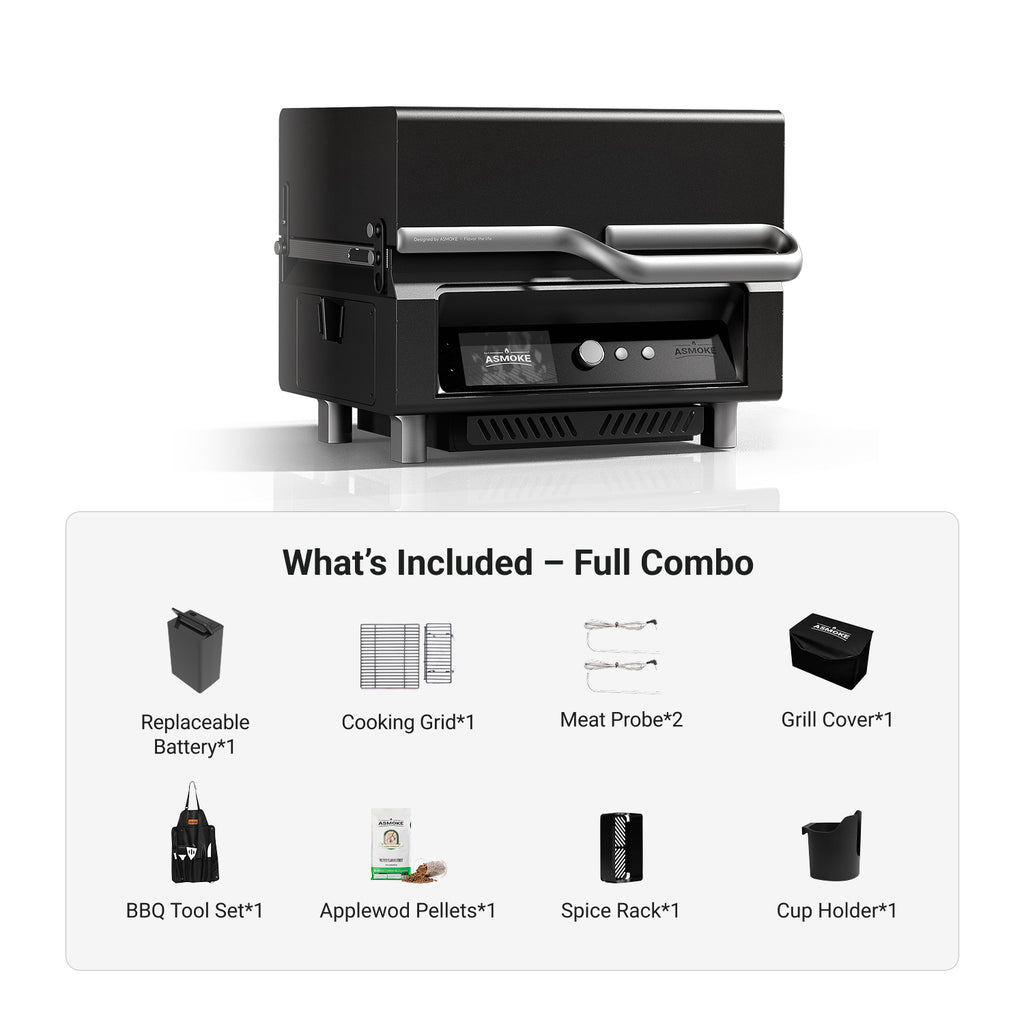
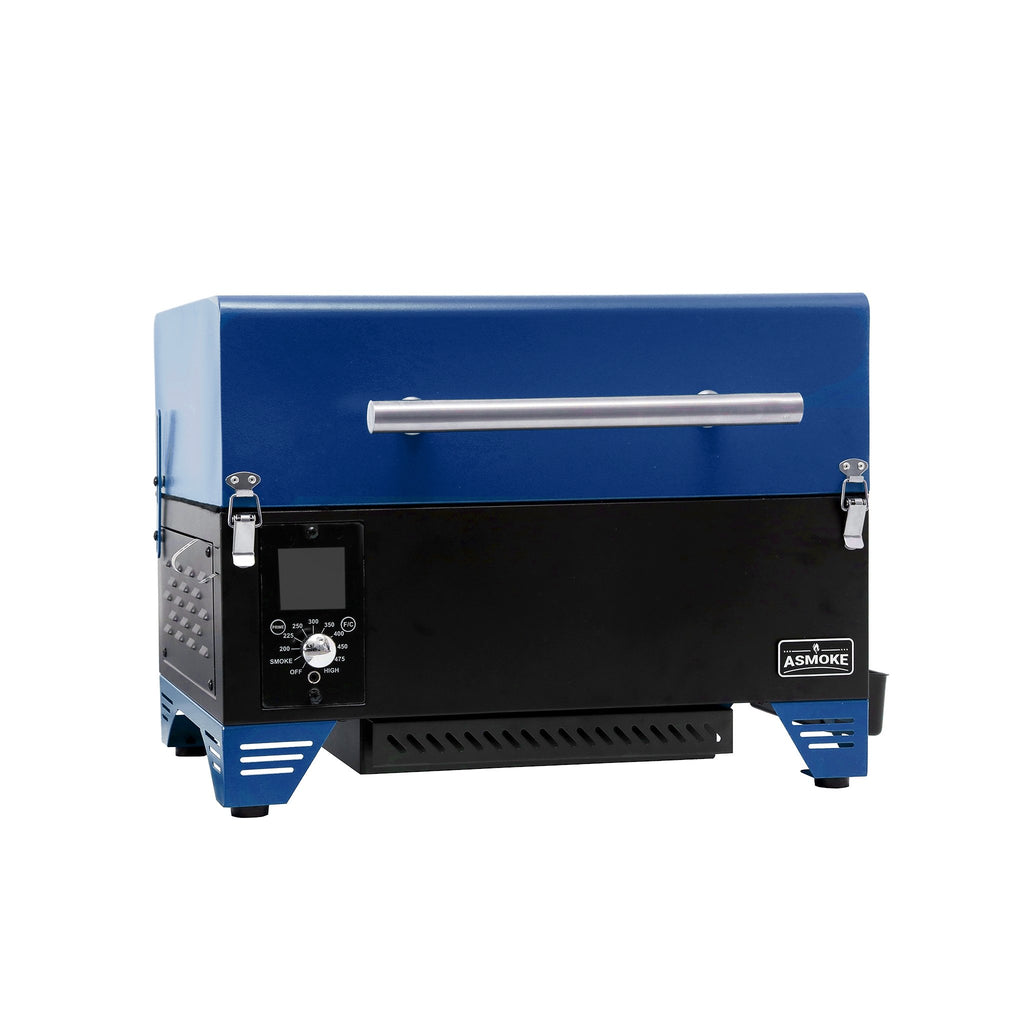
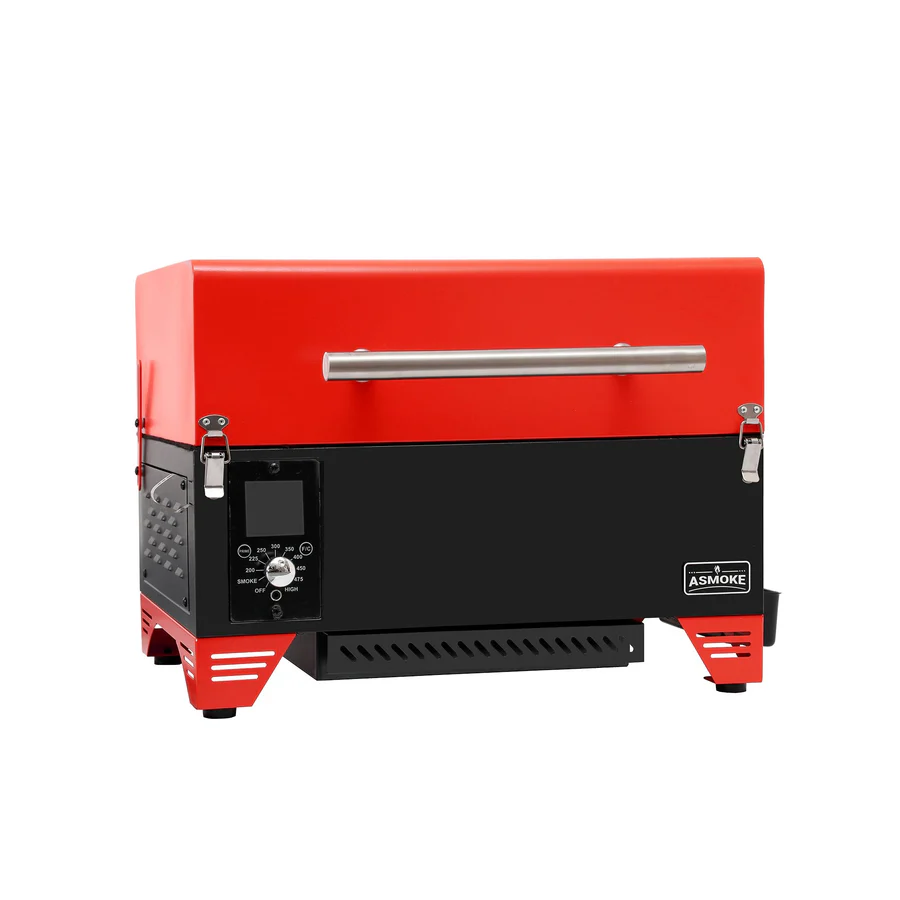
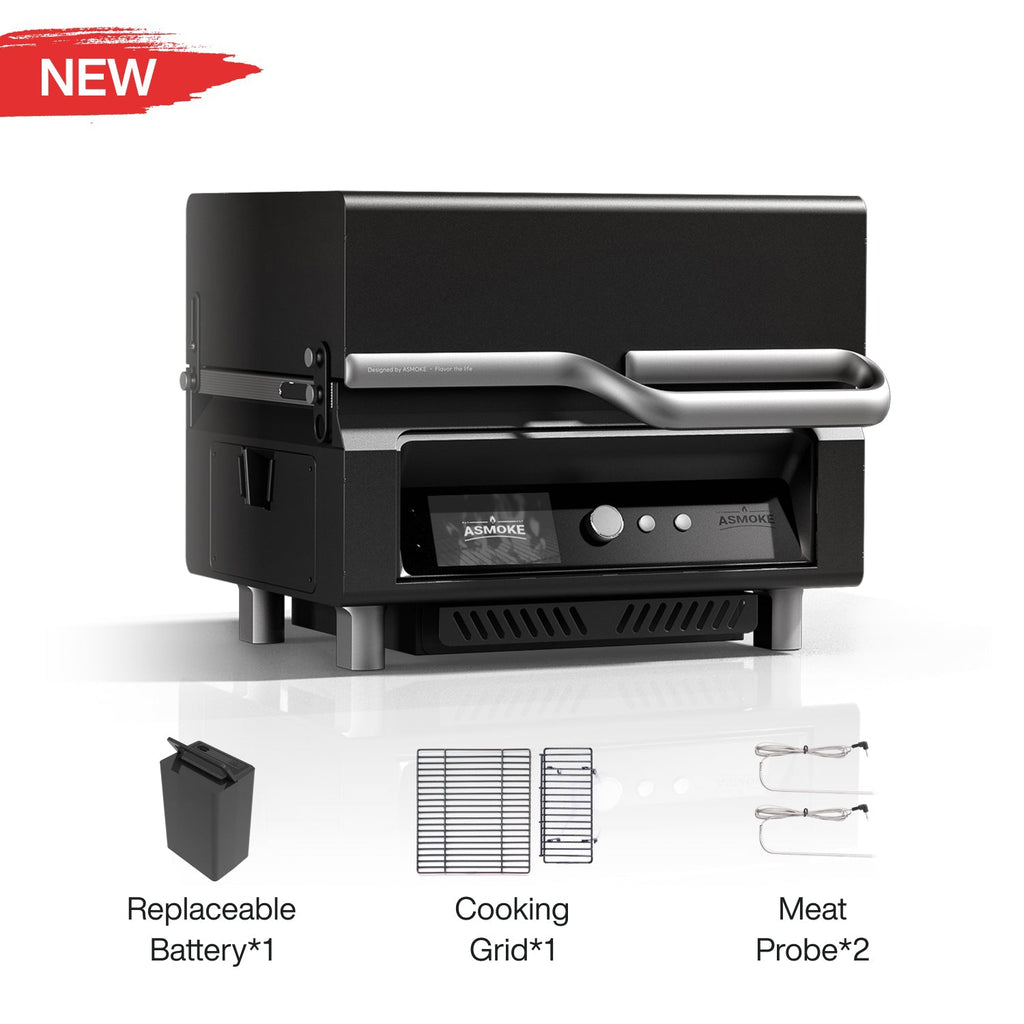
ASMOKE Essential fits this topic because the article naturally supports a buyer who wants a portable pellet grill that feels approachable rather than difficult to learn.
This guide should connect into:
- ASMOKE Essential
- Recipe Hub
- Manual / Support
- Bluetooth Thermometer Probe
- ASMOKE Apple Wood Pellets
- Why Pellet Grill
That path lets the reader move from education to product understanding with a clear next step if they want to go deeper.
FAQ
What temperature should I start with on a portable pellet grill?
For beginners, a medium cooking range is usually the easiest place to start because it is more forgiving and works for many foods.
Is a pellet grill harder to control than a gas grill?
Yes, because it must manage fuel feed, airflow, combustion response, heat transfer, and outdoor conditions instead of only direct burner heat.
Why doesn’t the set temperature tell the whole story?
Because the grill still has to turn live combustion into a stable grate-level cooking environment. The fire and the food zone are not exactly the same thing.
Why does ASMOKE talk about combustion temperature and grill grate temperature separately?
Because better control comes from understanding both how heat is generated and how heat is delivered to the food.
What is ASMOKE FlameTech?
FlameTech is ASMOKE’s data-trained control approach for improving stability by linking combustion behavior with grill grate temperature behavior.
Does stable temperature control matter for beginners?
Yes. Stable control reduces guesswork, improves repeatability, and makes the grill easier to trust from cook to cook.
Final Recommendation
The best beginner temperature guide is not just a chart. It is an explanation of how pellet grilling actually works.
For ASMOKE, the clearest official explanation is to show users what temperature ranges are useful, explain why pellet-grill control is inherently more complex than direct-burn gas cooking, and then explain how FlameTech is intended to support a more stable cooking environment.
From there, the reader can continue into ASMOKE Essential, the recipe system, and the related support and accessory pages for more detailed product information.